Your Life, Your Rights
Every young person has special rights that help them grow up safe, healthy, and happy. No matter who you are or where you live, these rights belong to you, and they help you get what you need to thrive.
Our advocacy is grounded in key international and provincial rights frameworks that affirm children and youth’s safety, voice, dignity, and cultural connection. These include the United Nations Convention on the Rights of the Child (UNCRC), United Nations Declaration on the Rights of Indigenous Peoples (UNDRIP), United Nations Convention on the Rights of Persons with Disabilities (UNCRPD), and Section 70 of B.C.’s Child, Family and Community Service Act (CFCSA), which together uphold the rights of all young people – including Indigenous children and those with disabilities – to be heard, supported, and treated with respect. You can learn more about these rights on this page.
We split up the basic rights that all young people have into these four categories:
Some Young People Need Extra Protection
Every young person has rights, but some face additional challenges that make it harder for their rights to be respected. That’s why there are special rights for certain groups, such as young people in government care, those with disabilities, and Indigenous young people.
I’m a young person in care, what are my rights?
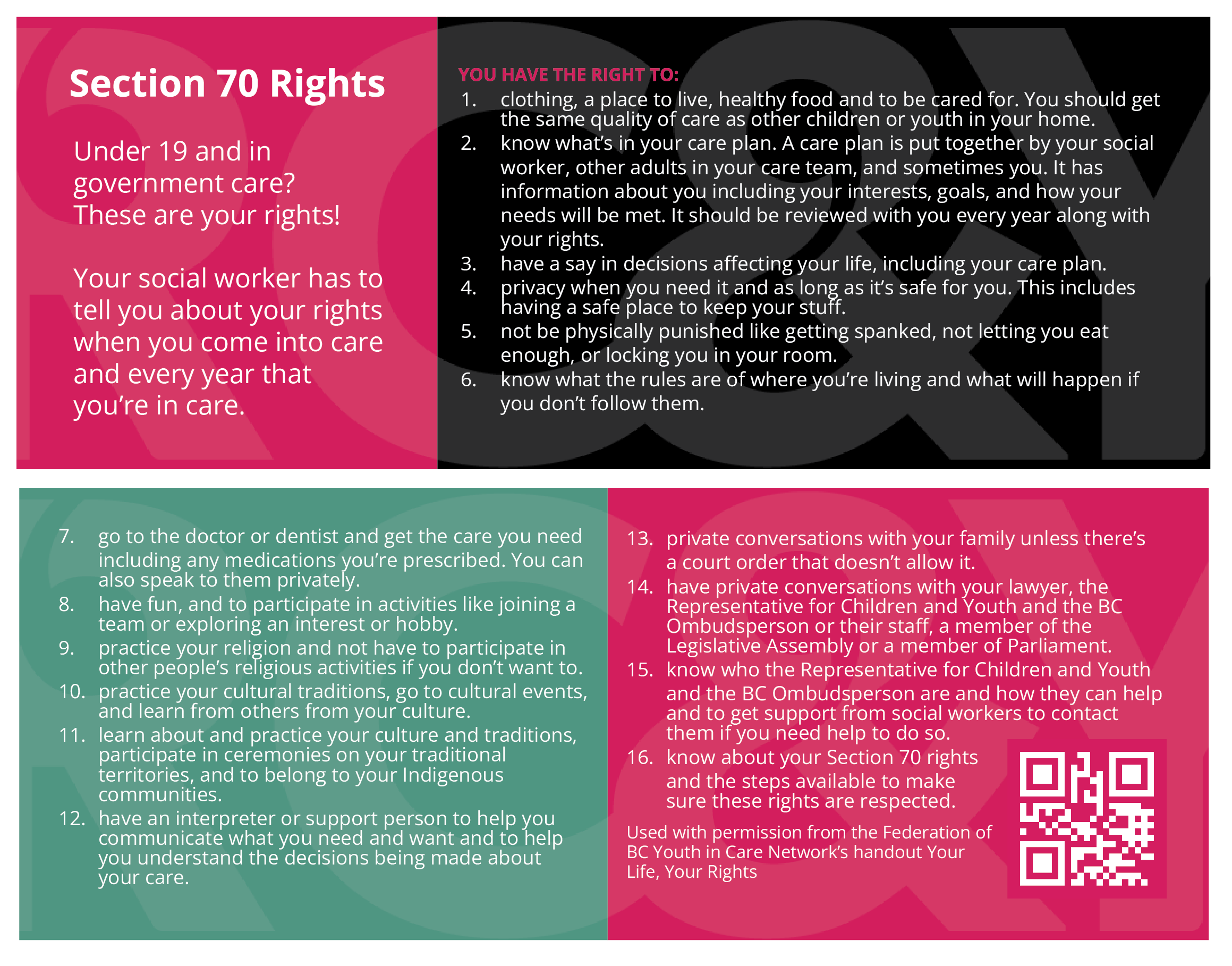
Section 70 of the Child, Family and Community Service Act (CFCSA) is a British Columbia law explaining your rights when you’re in care. That means foster care, group homes, living with extended family, or any government care arrangement. These rights are not optional, and they must be respected.
You Have A Right To….
Food, Safety & Shelter
You must be taken care of
Privacy
Your space and things are yours
To Speak Up
You can talk to an Advocate, lawyer, or worker
Support & Information
You have the right to understand what’s happening in your life and to be involved in decisions
I’m an Indigenous young person, what are my rights?
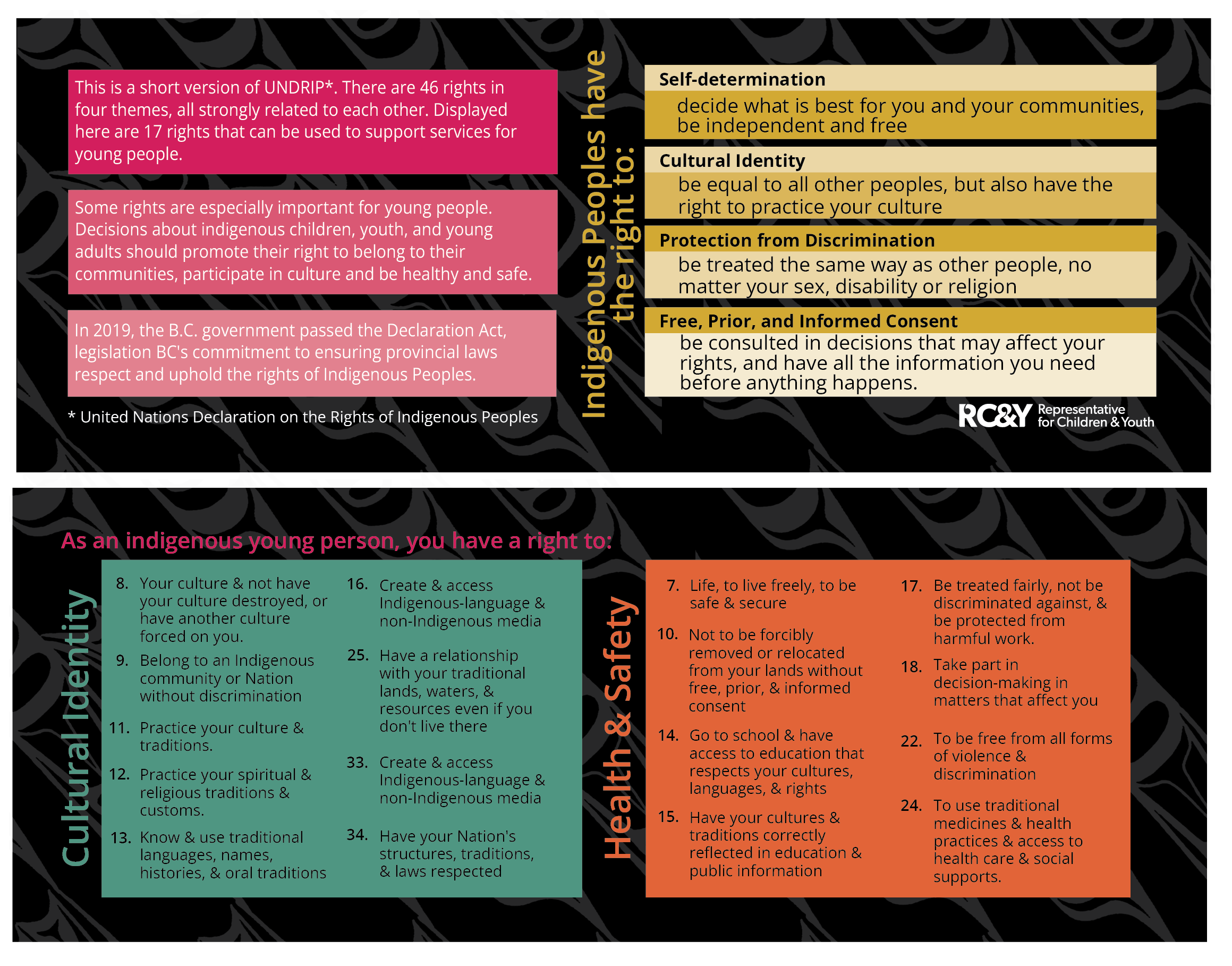
UNDRIP (United Nations Declaration on the Rights of Indigenous Peoples) is about undoing the harms of colonization. It confirms that Indigenous youth have the right to belong, be heard, stay connected to their Nations, and help shape their futures.
You Have A Right To…
Culture & Ceremony
You have the right to participate in your cultural traditions
Connection to Land
Your ties to territory must be respected
Belonging
You deserve to grow up in your Nation, not be removed from it
Self-determination
You and your Nation can make your own decisions
I’m a young person with disabilities, what are my rights?
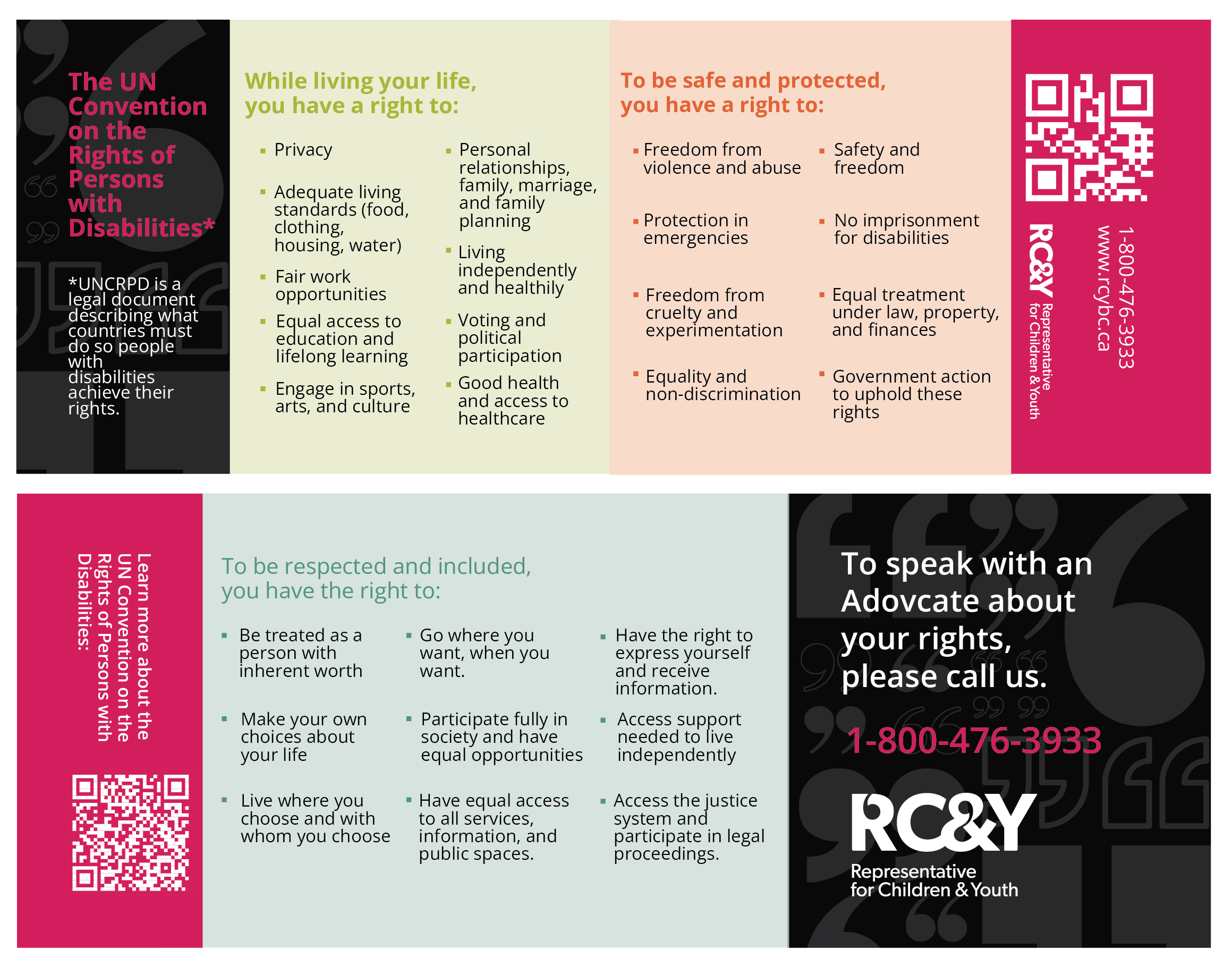
The UNCRPD (United Nations Convention on the Rights of Persons with Disabilities) is about ensuring you have choice, independence, inclusion, and dignity, no matter what kind of support you need.
You Have A Right To…
Accessibility
You have the right to access school, information, and services
Support to Decide
You can make your own choices with support
Equality
You must be treated fairly
Communication
You have the right to be understood
Learning About Rights
While RCY works directly with youth, we know that younger children also have the right to be heard, to be safe, and to understand their rights. This section provides trusted, age-appropriate resources that adults can use to introduce children (typically ages 5–10) to these important ideas.
Whether you’re a sibling, caregiver, teacher, support worker or community member, the tools below can help start meaningful, empowering conversations with younger children.
Government of Canada
Society for Children & Youth of B.C.
- Find resources here
Test Your Knowledge on Youth Rights!
How well do you know your rights?
Take this quiz to figure out how much you know about your rights as a child, youth, or young adult!
Question
Your answer:
Correct answer:
Please wait..
↺Your Answers
Do you feel like your rights aren’t being upheld?
You have a right to have your voice heard and considered by people who are making decisions about you. The Representative’s office can help you speak out and be heard if you’re having a problem getting a government service, if you disagree with a decision that was made about you or if you’re having a hard time speaking up for your rights.
RCY provides workshops for young people and adults on youth rights. Click here to learn more about these events.